


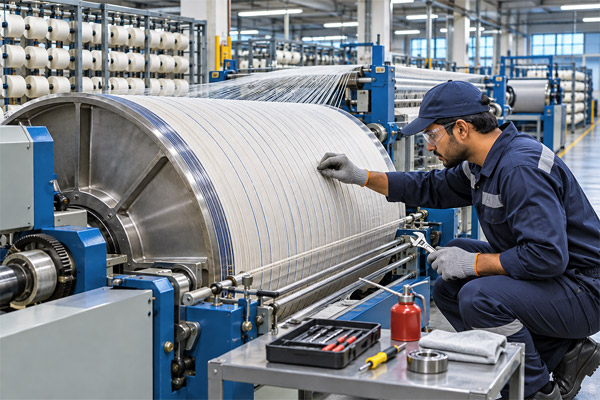
Warping Drum Maintenance Tips for Textile Units
A busy textile unit needs reliable machines and careful yarn preparation. Small problems, such as lint buildup, a scratched drum surface or unusual vibration, can interrupt work. Regular warping drum maintenance helps your team notice these changes early and plan repairs before the problem grows.
Good maintenance starts with cleaning, surface checks and clear records. Operators should report changes, while trained technicians handle repairs and adjustments. When a drum needs replacement, a warping drum manufacturer or supplier can review the required dimensions, material and machine details.
This guide shares practical maintenance tips for textile units. Use these tips along with your machine manual, as cleaning methods, lubricants and service needs differ between machines.
What Is a Warping Drum Used for in Textile Production?
A warping drum supports yarn during warp preparation. In sectional warping, yarn is wound onto the drum in separate sections. After the required sections are complete, the warp is transferred to a weaver’s beam.
The drum works with the creel, yarn guides, tension devices and other machine parts. Its condition matters, but winding quality also depends on these connected parts and the machine settings.
That is why a useful maintenance routine checks the whole yarn path rather than focusing only on the drum.
Why Is Warping Drum Maintenance Important?
Warping drum maintenance helps textile teams find wear, damage and loose parts before they cause further trouble. It also supports better planning by showing which tasks need attention during the next shutdown.
A small change can be easy to overlook during a busy shift. For example, an operator may notice yarn catching near one area of the drum. Recording the location gives the maintenance team a clear place to inspect.
Regular maintenance helps your team:
- Notice surface damage early.
- Keep cleaning tasks consistent.
- Plan service work around production.
- Track repeated machine faults.
- Share information between shifts.
- Make better repair and replacement decisions.
Maintenance supports reliable operation, while yarn quality, settings and working conditions also affect results.
Make the Machine Safe Before Starting Maintenance
Before cleaning or inspecting the drum by hand, stop the machine and follow your site’s approved isolation procedure. Prevent an unexpected restart and have trained staff make stored energy safe.
A stop button alone does not provide full isolation. Never wipe a rotating drum or reach into moving parts.
Before work begins:
- Inform the operator and maintenance team.
- Follow the machine’s shutdown instructions.
- Isolate and secure the required energy sources.
- Wait until all movement has stopped.
- Restrict access to the work area where needed.
- Use the tools and protective equipment required for the task.
Only trained people should carry out repairs or adjustments beyond the operator’s approved duties.
Check Drum Alignment and Mounting Conditions
Alignment affects how machine parts work together. Checks should be completed by trained staff using the methods and limits given by the machine maker.
An alignment inspection may be needed after repair work, an impact or a change in machine behaviour. Visual checks alone may not confirm the condition.
The technician may inspect:
- Drum and shaft position.
- Bearing supports.
- Mounting points.
- Related guides and rollers.
- Drive parts, where fitted.
Avoid changing supports or alignment settings by trial and error. Moving one part may affect several others.
Follow the Correct Bearing Lubrication Routine
Bearing lubrication depends on the machine and bearing design. Some bearings need planned lubrication, while sealed bearings may not need routine greasing.
Use the specified lubricant, amount and service interval. Adding extra grease does not always improve bearing performance.
Good Lubrication Practices
- Check the machine manual before starting.
- Confirm the correct lubricant.
- Clean fittings before applying lubricant.
- Use the stated amount.
- Remove excess lubricant as instructed.
- Record the completed task.
Keep grease and oil away from yarn-contact surfaces. Do not mix lubricants unless the equipment maker has approved the combination.
Report leakage, unusual noise or a change in bearing temperature. Never touch a moving or hot bearing housing to check its condition.
Report Unusual Noise and Vibration Early
Operators often know the normal sound of their machine. A new knocking, rubbing or rattling noise can be an early sign that inspection is needed.
Watch for:
- Vibration that was not present before.
- A new sound during a certain stage of operation.
- Repeated rattling near a support.
- Uneven machine movement.
- A change that started after maintenance.
These signs do not identify the cause on their own. Bearings, drive parts, supports and fasteners may all need checking.
Follow the site’s fault-reporting procedure. Do not increase speed to see whether a vibration disappears.
Inspect Fasteners, Guards and Supports
During planned maintenance, trained staff should check the fasteners, supports and guards listed in the machine manual.
Look for missing parts, loose fittings and signs of movement. Where a tightening torque is specified, use the correct tools and value.
Important checks include:
- Drum mounting bolts.
- Bearing housing fasteners.
- Guard fittings.
- Support brackets.
- Cracks near mounting points.
- Parts that repeatedly become loose.
A bolt that keeps loosening may be a sign of another fault. Record repeat problems so the team can investigate the cause.
Check the Full Yarn Path When Winding Problems Appear
Uneven winding or yarn breakage does not always come from the drum. Yarn quality, guides, tension devices and settings can also affect the process.
Before making adjustments, check:
- Whether the problem affects one yarn end or many.
- Where the problem first appears.
- Whether it began after a yarn or batch change.
- The condition of guides and tension devices.
- Any recent setting changes.
- Any recent repairs or cleaning work.
Change settings only through the approved process. Changing several settings at once makes it harder to know what solved the problem.
Create a Warping Drum Maintenance Schedule
| When to Check | Suggested Task | Responsible Person |
|---|---|---|
| Before starting a shift | Look for visible damage, loose yarn and unresolved faults | Trained operator |
| During normal operation | Observe winding and report new noise or vibration from a safe position | Trained operator |
| During a planned cleaning stop | Clean approved areas and inspect the drum surface | Authorised staff |
| At the maker’s service interval | Check lubrication, bearings, drives, alignment and fasteners | Maintenance technician |
| After repair or replacement | Complete required inspections and restart checks | Maintenance and production teams |
Common Warping Drum Problems and What to Check
| Problem Observed | Possible Areas to Inspect | Recommended Next Step |
|---|---|---|
| Yarn catches in one area | Drum surface and nearby yarn guides | Stop safely, record the location and arrange inspection |
| New vibration | Bearings, supports, fasteners and drive parts | Follow the fault-reporting procedure |
| Uneven winding | Yarn path, tension devices, alignment and settings | Review the full process |
| Repeated residue buildup | Cleaning method and source of contamination | Find the source and review the cleaning routine |
| New bearing noise | Bearing condition, lubrication and alignment | Ask trained maintenance staff to investigate |
| Damaged surface finish | Wear, contact damage or cleaning method | Seek advice before resurfacing or recoating |
Keep Clear Warping Drum Maintenance Records
A useful maintenance record should tell the next person what happened and what needs attention. Simple, clear notes are better than vague descriptions.
Include:
- Machine identification.
- Date and running hours, if available.
- Fault or observation.
- Exact location of the issue.
- Work completed.
- Parts or lubricants used.
- Name of the person completing the work.
- Follow-up action.
For example, write “scratch near the left drum edge” instead of “surface problem.”
Records also help the team find patterns. If a fault returns after each repair, the cause may need a wider review.
Train Operators to Notice Small Changes
Operators do not need to diagnose every fault. Their role is to observe the machine, follow approved checks and report changes clearly.
Useful operator training should cover:
- Normal machine behaviour.
- Visible signs of damage.
- Approved cleaning duties.
- Fault-reporting steps.
- Safe shutdown procedures.
- Clear shift handovers.
Make reporting easy. A short note with the time, location and operating stage can give a technician a useful starting point.
Common Warping Drum Maintenance Mistakes to Avoid
Small shortcuts can make repairs harder or create new problems.
Avoid these mistakes:
- Cleaning while the drum is moving.
- Using sharp tools on the drum surface.
- Applying oil to yarn-contact areas.
- Using lubricant without checking its specification.
- Ignoring new noise or vibration.
- Making unapproved alignment changes.
- Restarting before guards and checks are complete.
- Leaving unresolved faults out of shift records.
A consistent routine helps the whole team work from the same information.
When Does a Warping Drum Need Professional Inspection?
Arrange professional inspection when the fault is outside your team’s approved tasks or when the cause remains unclear.
Seek technical help for:
- Repeated vibration after earlier repairs.
- Major surface damage.
- Peeling surface finishes.
- Suspected shaft damage.
- Repeated bearing problems.
- Damage caused by an impact.
- Proposed machining, resurfacing or replacement.
Share the machine model, operating conditions and maintenance history. This helps the technician understand the application before work starts.
How Can a Warping Drum Manufacturer Help With Replacement?
A warping drum manufacturer can review the specifications needed for a replacement drum. This is useful when damage or wear makes continued use unsuitable.
Before requesting a replacement, prepare:
- Approved drum dimensions.
- Working width.
- Shaft and mounting details.
- Required material.
- Surface finish.
- Operating speed and balancing requirements.
- Machine clearances.
- Yarn application.
Use approved drawings wherever possible. A photograph helps explain the arrangement, but it cannot confirm every dimension or tolerance.
Ask the manufacturer to confirm what information is needed before production begins.
What Should You Look for in a Warping Drum Supplier?
| Selection Point | What to Confirm |
|---|---|
| Machine compatibility | Dimensions, mounting arrangement and clearances |
| Material | Suitability for the stated application |
| Surface finish | Required finish and acceptance criteria |
| Custom requirements | Details that can be made to the approved drawing |
| Inspection | Available dimensional and quality records |
| Technical guidance | Information provided for handling, fitting and use |
Frequently Asked Questions About Warping Drum Maintenance
Follow the machine maker’s cleaning instructions. Cleaning needs depend on running hours, yarn type, lint levels and process residue. Review the routine if buildup appears between planned cleaning stops.
Provide the machine model, approved dimensions, shaft and mounting details, material, surface finish and operating requirements. Include drawings and photographs where available.
Do not clean a rotating drum by hand. Stop the machine and follow the approved isolation procedure before hands-on cleaning.
Do not apply oil to the yarn-contact surface unless the machine maker specifically requires it. Oil can contaminate yarn. Lubricate only the approved points.
Possible causes include loose parts, bearing wear, alignment faults and drive problems. A trained technician should inspect the machine to confirm the cause.
No. Lubrication needs vary by bearing design. Some sealed bearings do not need routine greasing. Follow the specified lubricant, amount and service interval.
Some surfaces may be repairable. The correct method depends on the material, finish, damage and allowed dimensions. Seek technical advice before polishing, grinding or recoating.
No. Yarn breakage can also involve yarn quality, guides, tension devices and machine settings. Check the full yarn path before deciding which part needs attention.
Contact a warping drum manufacturer when planning a replacement or reviewing custom drum requirements. Share approved drawings, dimensions and machine details to support the review.
Check whether the supplier can confirm the required dimensions, material, mounting arrangement and surface finish. Ask about inspection records and available technical guidance.
Warping Drum Manufacturer and Supplier in Ahmedabad
Dhaval Engineering Works is a warping drum manufacturer and supplier in Ahmedabad, Gujarat, India. The company offers custom warping drums based on application and machine requirements.
If your textile unit is planning a replacement, share the existing drum dimensions, machine model, mounting arrangement and required surface finish. Approved drawings and clear photographs can help the team review your enquiry.
Visit the warping drum product page to discuss your requirements with Dhaval Engineering Works.