

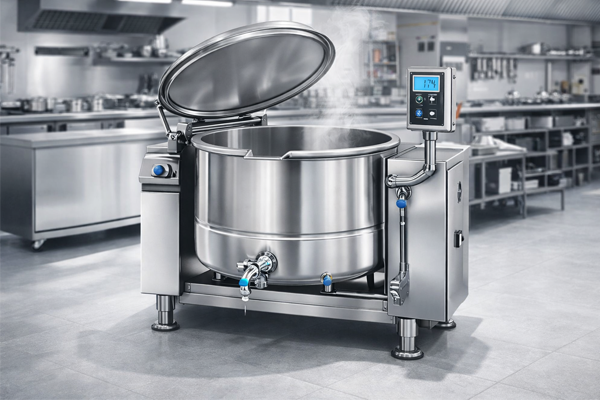
Choosing the right SS cooking vessel is one of the most important decisions for any commercial kitchen. Whether you run a hotel, restaurant, catering unit, canteen, cloud kitchen, hostel, hospital, or industrial food facility, the quality of your cooking vessels directly affects food safety, cooking efficiency, maintenance cost, and long-term durability.
Commercial kitchens handle large volumes of food every day. This means vessels must withstand high heat, heavy loads, frequent washing, and continuous use without losing performance. Stainless steel cooking vessels are widely preferred because they are strong, hygienic, corrosion-resistant, and long-lasting. However, not all SS cooking vessels are the same.
This detailed guide will help you understand how to choose the right SS cooking vessel for commercial use, covering material grade, thickness, capacity, design, safety, application, and maintenance. The language is simple and practical, making it easy for buyers, kitchen managers, and business owners to make the right decision.
Why SS Cooking Vessels Are Ideal for Commercial Kitchens
Stainless steel cooking vessels are widely used in commercial kitchens because they meet both safety and performance requirements.
Because of these advantages, SS cooking vessels are used in bulk cooking environments such as hotels, industrial kitchens, temples, canteens, and food processing units.
Understand Your Commercial Cooking Requirement
Before selecting an SS cooking vessel, it is important to clearly understand your cooking needs.
Ask yourself the following questions:
What type of food will be cooked?
What is the daily cooking quantity?
Is cooking done in batches or continuously?
What heat source is used: gas, steam, or electric?
Is the kitchen manual or semi-automated?
Choose the Right Stainless Steel Grade
One of the most important factors when choosing an SS cooking vessel is the stainless steel grade.
SS 304 – Most Common for Commercial Kitchens
SS 304 is the most widely used stainless steel for cooking vessels.
Benefits of SS 304:
- Food-grade and hygienic
- Excellent corrosion resistance
- Safe for acidic and salty food
- Strong and durable
SS 304 cooking vessels are ideal for hotels, restaurants, canteens, hostels, and catering units.
SS 316 – For High-Corrosion Environments
SS 316 contains molybdenum, which gives extra resistance to corrosion.
Used when:
- Cooking highly acidic food regularly
- Operating in coastal areas
- Long exposure to salt or chemicals
SS 316 vessels are more expensive but suitable for special applications like marine kitchens or pharmaceutical food processing.
Select the Correct Vessel Thickness
Thickness plays a major role in the performance and life of an SS cooking vessel.
Why Thickness Matters
- Prevents warping under high heat
- Ensures even heat distribution
- Increases vessel life
- Reduces risk of food burning
Recommended Thickness for Commercial Use
- Small vessels: 1.2 mm to 1.5 mm
- Medium vessels: 1.5 mm to 2.0 mm
- Large and bulk cooking vessels: 2.0 mm to 3.0 mm or more
For heavy-duty commercial kitchens, thicker vessels are always better, even if the initial cost is slightly higher.
Choose the Right Capacity and Size
Capacity selection depends on how much food you cook per batch.
Common commercial vessel capacities include:
- 20 liters
- 50 liters
- 100 liters
- 200 liters
- 300 liters and above
Tips for Capacity Selection
- Avoid very small vessels for bulk cooking, as they increase labor and cooking time
- Avoid over-sized vessels that are difficult to handle or clean
- Match vessel size with burner size for efficient heat usage
Correct sizing improves productivity and reduces fuel consumption.
Vessel Shape and Design Considerations
The shape of the SS cooking vessel affects cooking efficiency and handling.
Common Vessel Shapes




Handle Design and Safety Features
In commercial kitchens, safety is extremely important.
Look for These Features
⇒ Strong welded handles
⇒ Smooth edges to prevent injury
⇒ Heat-resistant handle placement
⇒ Balanced design for lifting
Poor handle design can cause accidents, especially when vessels are filled with hot food. Always choose vessels with reinforced handles suitable for heavy loads.
Compatibility with Heat Source
SS cooking vessels must match your kitchen’s heat source.
Gas Cooking
- Flat and thick bottom required
- Even heat distribution
- Strong base to handle flame heat
Steam Cooking
- Jacketed SS vessels recommended
- Controlled and uniform heating
- Suitable for bulk food preparation
Electric or Induction
- Magnetic base required
- Flat bottom for proper contact
Hygiene and Food Safety Standards
Commercial kitchens must follow strict hygiene standards.
A good SS cooking vessel should:
- Have a smooth and polished inner surface
- Be easy to wash and sanitize
- Not react with food
- Resist staining and odor
Stainless steel is non-porous, which makes it ideal for maintaining food safety in high-volume kitchens.
Ease of Cleaning and Maintenance
Cleaning time directly affects kitchen productivity.
Choose SS cooking vessels that:
- Have smooth weld joints
- Do not trap food particles
- Can handle frequent washing
- Are resistant to scratches
Low-maintenance vessels reduce labor effort and improve kitchen efficiency.
Durability and Long-Term Cost
While SS cooking vessels may have a higher upfront cost compared to aluminum or mild steel, they offer better long-term value.
Benefits include:
- Longer life
- Lower replacement cost
- Reduced maintenance
- Better food safety
In commercial kitchens, durability always saves money in the long run.
Customization Options for Commercial Kitchens
Many commercial kitchens require customized SS cooking vessels.
Customization may include:
- Special capacity
- Custom thickness
- Additional handles
- Lid design
- Tilting mechanism
Custom vessels improve workflow and reduce manual effort in large kitchens.
Common Mistakes to Avoid While Buying SS Cooking Vessels
- Choosing thin vessels to save cost
- Ignoring steel grade
- Buying incorrect capacity
- Overlooking handle strength
- Not checking heat source compatibility
Avoiding these mistakes ensures smooth kitchen operations.
Maintenance Tips for Long Life
- Clean vessels after every use
- Avoid harsh chemicals
- Use soft scrubbers
- Dry properly to avoid water marks
- Inspect handles and joints regularly
Proper care increases vessel life significantly.