

How to Choose the Right Heating Roller for Your Industrial Process
Choosing the right Heating Roller is important for stable temperature, better product quality and smooth production. A roller that does not heat evenly may create cold areas, hot spots, poor bonding, uneven drying or surface damage.
The roller size, material and heating method also affect performance. A roller that is too small may not provide enough contact time. A roller that is too large may increase machine space, weight, warm-up time and cost.
Dhaval Engineering Works manufactures customised heating rollers for printing, packaging, textile, conveyor and other industrial processing applications. Its listed options include aluminium and stainless steel construction, different surface finishes, single-entry, multiple-entry and double-shell designs, along with custom diameters and heating arrangements.
This guide explains how to select a Heating Roller according to your required temperature, material, machine speed, roller size, surface finish and production process.
What Is a Heating Roller?
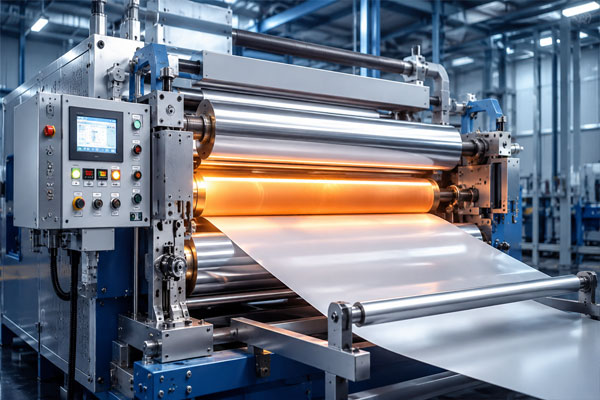
A Heating Roller is a cylindrical machine component that transfers heat to paper, fabric, film, foil, plastic, laminate or another moving material.
The roller may be heated by:
- Electric heater cartridges
- Steam
- Another custom heating arrangement
- An internal heating path designed for the process
As the material touches or wraps around the rotating roller, heat moves from the roller surface into the material. This can support drying, bonding, laminating, coating, sealing, pressing or surface finishing.
Dhaval Engineering Works lists electric-heated, steam-heated and customised rollers. Its electric design may use internal heater cartridges, a rotating thermocouple and slip-ring assemblies for power and temperature signals.
Why Is Correct Heating Roller Selection Important?
The wrong roller can create several production problems.
A roller with low heating capacity may not reach the required temperature. A roller with poor internal heat distribution may develop uneven surface temperature. An incorrect surface finish may mark, stick to or damage the material.
An unsuitable Heating Roller may cause:
- Uneven drying
- Weak lamination
- Poor adhesive bonding
- Material sticking
- Roller marks
- Temperature changes
- Long warm-up time
- High power use
- Wrinkles in the material
- Slow production
- Frequent heater failure
- Product rejection
Correct roller selection can help improve:
- Heat uniformity
- Product quality
- Production speed
- Surface finish
- Adhesive activation
- Drying consistency
- Energy use
- Machine reliability
- Roller service life
- Operator safety
- Understand Your Industrial Process
Before selecting the roller, clearly understand what the roller must do.
Ask these questions:
- Which material will pass over the roller?
- Is the material paper, fabric, film, foil or plastic?
- Does the material need drying or heating?
- Is adhesive being activated?
- Is the roller used for lamination?
- Is pressure applied against another roller?
- What is the required temperature?
- How fast does the material move?
- How wide is the material?
- Can the material be damaged by excess heat?
- Does the process release dust, fumes or adhesive?
- Will the machine run continuously?
A Heating Roller used in a textile machine may need different dimensions and surface properties from a roller used for plastic film or paper lamination.
Information to Give the Manufacturer
Share the following process details:
- Material name
- Material thickness
- Material width
- Required working temperature
- Maximum temperature
- Machine speed
- Roller rotation speed
- Required roller diameter
- Required face length
- Product-contact pressure
- Heating method available
- Electrical supply
- Shaft and bearing details
- Existing machine drawing
- Required surface finish
- Daily running hours
Complete information helps the manufacturer suggest the correct roller construction and heating system.
- Choose the Right Heating Method
The heating method affects temperature range, warm-up time, control, installation and maintenance.
Dhaval Engineering Works lists electric and steam-heated rollers, along with customised designs for different process requirements.
Electric Heating Roller
An Electric Heating Roller normally uses heating elements installed inside the roller body.
It may be suitable when:
- Accurate electrical temperature control is required
- Steam is not available in the factory
- The machine needs an independent heat source
- Quick start and stop are important
- Different temperature settings are used
- The roller must be installed on a compact machine
An electric design may include:
- Heater cartridges
- Thermocouple
- Slip ring
- Temperature controller
- Electrical control panel
- Safety cut-off system
Steam Heating Roller
A Steam Heating Roller uses steam flowing through an internal path or shell arrangement.
It may be considered when:
- The factory already has a steam system
- Continuous heating is required
- The machine runs for long production periods
- Several rollers use the same heating source
- The process is designed for steam temperature
The steam supply, pressure, condensate drainage and rotary connections must match the roller design.
Electric vs Steam Heating Roller
| Selection Point | Electric Heating Roller | Steam Heating Roller |
| Heat source | Electrical heaters | Factory steam supply |
| Installation | Useful where steam is unavailable | Needs steam and condensate connections |
| Temperature control | Can provide direct electrical control | Depends on steam pressure and control system |
| Start-up | Can support quick independent start-up | Depends on steam-system readiness |
| Maintenance | Heaters, sensors and slip rings | Rotary joints, steam lines and traps |
| Best suited for | Independent machines and controlled heating | Plants with an existing steam system |
Image Suggestion 2: Comparison diagram showing an electric cartridge-heated roller and a steam-heated roller with internal flow paths.
Alt Text: Electric Heating Roller vs Steam Heating Roller
- Confirm the Required Temperature
Do not select a Heating Roller only by asking for the highest possible temperature.
First define:
- Normal working temperature
- Maximum safe temperature
- Start-up temperature
- Temperature allowed for the material
- Temperature allowed for the adhesive
- Temperature allowed for the surface coating
- Acceptable temperature variation
- Required warm-up time
The normal production temperature is more important than the highest temperature written in a catalogue.
Why Temperature Selection Matters
Too little heat may cause:
- Incomplete drying
- Weak bonding
- Poor lamination
- Low production speed
- Wet or uncured material
Too much heat may cause:
- Material shrinkage
- Surface burning
- Film deformation
- Adhesive damage
- Colour change
- Product sticking
- Higher energy use
The roller should reach the required process temperature without regularly operating at its maximum limit.
- Check Heating Uniformity
Heating uniformity means keeping the roller surface at a similar temperature across its full working width.
Poor heat distribution may create:
- A hot centre and cold edges
- Hot bands on the roller
- Uneven drying
- Weak bonding on one side
- Material colour differences
- Wrinkles
- Different product thickness
- High rejection
Dhaval Engineering Works states that the internal heater placement in its electric roller design is planned to support even surface heating.
Questions About Heat Uniformity
Ask the manufacturer:
- How are the heaters placed?
- Are there separate heating zones?
- Where is the temperature sensor located?
- Is the temperature measured inside or near the roller surface?
- How is edge temperature controlled?
- Is insulation provided at the roller ends?
- Can temperature variation be tested?
- Will a heating trial report be provided?
For wide rollers, a single heater or single control zone may not always provide the required result. The number of heating zones should be decided according to roller width and process accuracy.
- Select the Correct Roller Diameter
Roller diameter affects:
- Material contact area
- Roller strength
- Heat-storage capacity
- Warm-up time
- Bending resistance
- Machine space
- Rotation speed
- Material wrapping
Dhaval Engineering Works provides Heating Roller diameter according to customer requirements rather than one fixed standard size.
Smaller-Diameter Roller
A smaller roller may provide:
- Compact machine installation
- Lower roller weight
- Faster response in selected designs
- Easier fitting in limited space
However, it may have:
- Lower structural strength
- Less material contact area
- Greater risk of bending on a wide machine
- Limited internal space for heaters
Larger-Diameter Roller
A larger roller may provide:
- More contact area
- Better resistance to bending
- More space for internal heating parts
- Stable heat storage
- Support for wider machines
However, it may require:
- More machine space
- Stronger shafts and bearings
- Greater drive power
- Longer warm-up time
- Higher manufacturing cost
The final diameter should match the material path, roller load and machine layout.
- Select the Right Roller Face Length
Face length is the usable working width of the roller.
It should be selected according to:
- Maximum material width
- Edge clearance
- Machine frame width
- Bearing position
- Heating-zone design
- Product movement
- Future width requirements
Example
Suppose the material is 1,500 mm wide.
A roller with exactly 1,500 mm of working face may leave no allowance for material movement or edge clearance. The required face length should be confirmed after reviewing the web path and machine drawing.
Ask the manufacturer to mention:
- Total roller length
- Usable face length
- Heated face length
- Shaft length
- Bearing distance
- Material edge clearance
Avoid an Oversized Face Length
An unnecessarily long roller may create:
- More roller weight
- Higher bending load
- More heating power
- Longer warm-up time
- Larger machine width
- Higher manufacturing cost
Choose the roller according to the normal material width and realistic future requirements.
- Choose the Right Roller Material
Heating Rollers are commonly manufactured from aluminium or stainless steel.
Dhaval Engineering Works lists both aluminium and stainless steel as available Heating Roller materials.
Aluminium Heating Roller
Aluminium may be considered when:
- Lower roller weight is useful
- Fast heat response is required
- The machine needs lower rotating mass
- The process is compatible with aluminium
- Corrosion conditions are not severe
Aluminium is lighter, but the required wall thickness, surface protection and mechanical strength should be checked.
Stainless Steel Heating Roller
Stainless steel may be considered when:
- Better strength is required
- The process includes moisture
- Corrosion resistance is important
- The roller needs a durable surface
- Cleaning is frequent
- The application needs a stainless product-contact area
The correct stainless steel grade should be selected according to the material, process temperature and cleaning chemicals.
Aluminium vs Stainless Steel Heating Roller
| Selection Point | Aluminium | Stainless Steel |
| Weight | Lower | Higher |
| Heat response | Can respond quickly | Depends on shell design and thickness |
| Mechanical strength | Must be checked for the load | Suitable for demanding structures |
| Corrosion resistance | Depends on environment and coating | Often selected for wet or demanding use |
| Surface options | Can be machined or coated | Can be polished, plated or coated |
| Final selection | Based on speed, load and process | Based on strength, surface and environment |
- Select the Correct Surface Finish
The roller surface directly touches or works close to the processed material.
Dhaval Engineering Works lists mirror-polished, chrome-plated, matt-polished and rubber-coated surface options.
Mirror-Polished Surface
A mirror finish may be considered when:
- A smooth product surface is required
- Material marks must be reduced
- Easy surface cleaning is important
- The process handles suitable film, paper or fabric
Chrome-Plated Surface
Hard chrome plating may provide:
- A hard working surface
- Improved wear resistance
- A smooth finish
- Better protection for selected industrial applications
The plating thickness and final finish should match the product requirement.
Matt-Polished Surface
A matt surface may be useful when:
- Too much surface shine is unwanted
- Controlled grip is required
- A specific product texture is needed
- Material release needs improvement
Rubber-Coated Surface
Rubber coating may be selected when:
- The roller must grip material
- Pressure must be distributed
- A softer contact surface is required
- Material slipping must be reduced
A rubber-coated roller may not suit every high-temperature process. The coating grade and safe temperature must be confirmed.
Why Choose Dhaval Engineering Works?
Dhaval Engineering Works is an Ahmedabad-based manufacturer, exporter and supplier of industrial and textile machinery components. Its company profile states that the business has operated since 1975 and develops customised equipment according to client requirements.
Its Heating Roller range includes:
- Aluminium and stainless steel options
- Electric and steam-heated designs
- Custom roller diameters
- Custom lengths
- Mirror-polished surfaces
- Chrome-plated surfaces
- Matt-polished surfaces
- Rubber-coated options
- Single-entry construction
- Multiple-entry construction
- Double-shell construction
- Replaceable heating elements
- Thermocouple and slip-ring arrangements
- Manual and automatic controls
- Custom engineering for industrial machines
Heating Rollers are offered for applications such as printing, lamination, coating, packaging, textile drying, finishing, film processing and plastic processing.
Customers should share their machine drawing, required temperature, material width, process speed, surface requirement and existing shaft arrangement to receive a suitable technical recommendation.
Heating Roller Selection Table
| Selection Factor | What You Should Check |
|---|---|
| Application | Printing, lamination, textile, packaging or plastic processing |
| Material Being Heated | Paper, fabric, film, foil or plastic |
| Heating Method | Electric, steam or customised heating arrangement |
| Temperature | Normal and maximum working temperature |
| Roller Diameter | Contact area, strength, operating speed and available machine space |
| Face Length | Material width and required edge clearance |
| Roller Material | Aluminium or stainless steel |
| Surface Finish | Mirror, chrome, matt or rubber-coated finish |
| Construction | Single-entry, multiple-entry or double-shell construction |
| Machine Speed | Material speed and required contact time |
| Pressure | Nip load, operating pressure and roller deflection |
| Control | Manual or automatic temperature control |
| Sensor | Thermocouple position and temperature feedback accuracy |
| Shaft and Bearing | Load capacity, speed and machine connection requirements |
| Safety | Safety guards, temperature alarms and emergency stop |
| Maintenance | Easy access to the heater, sensor, bearing and roller surface |
Questions to Ask a Heating Roller Manufacturer
Ask these questions before approving the roller:
- Which heating method is suitable for our process?
- What roller diameter should we use?
- What face length is required?
- Should we select aluminium or stainless steel?
- Which surface finish will suit our material?
- What temperature can the roller maintain?
- How will temperature uniformity be controlled?
- How many heating zones are required?
- What heater power will be used?
- How long will the roller take to heat?
- Where will the thermocouple be installed?
- Which slip-ring system will be used?
- Can individual heaters be replaced?
- What shaft size is required?
- Which bearings should be used?
- What runout tolerance will be provided?
- Is balancing required?
- Can the roller handle nip pressure?
- Which safety controls are included?
- Can the roller be made according to our existing machine drawing?
- Will installation and maintenance support be provided?
Conclusion
Choosing the right Heating Roller is not only about selecting a roller diameter.
The heating method must match your factory and process. The roller material must provide suitable strength, heat response and corrosion resistance. The diameter and face length must match the machine and material width.
You should also review temperature uniformity, surface finish, heater power, machine speed, pressure, sensors, shafts, bearings, controls and safety.
Do not select a roller only by price or maximum temperature. Share complete process and machine details with the manufacturer and request a clear technical drawing.
A correctly selected Heating Roller can improve heat distribution, reduce product rejection, support better bonding and provide smoother production.
FAQs
A Heating Roller is a rotating industrial cylinder that transfers controlled heat to paper, fabric, film, plastic, foil or another moving material.
Heating Rollers are commonly used in printing, packaging, lamination, coating, textile drying, finishing, film processing and plastic-processing machines.
Select the roller according to your material, required temperature, machine speed, roller size, heating method, surface finish and production process.
Choose electric heating when independent and direct electrical control is useful. Choose steam heating when your factory already has a suitable steam system and the process is designed for it.
Aluminium may suit lightweight and quick-response applications, while stainless steel may suit demanding, wet or corrosion-sensitive processes. Final selection depends on the application.
Choose diameter according to material contact, roller load, machine space, rotation speed, internal heater space and required structural strength.
Face length is the usable working width of the roller that contacts or heats the material.
Uneven temperature may result from failed heaters, poor heater placement, incorrect sensor position, heat loss near the ends or an unsuitable internal design.